
T-FIT® Special Silicone for Cleanroom Insulation
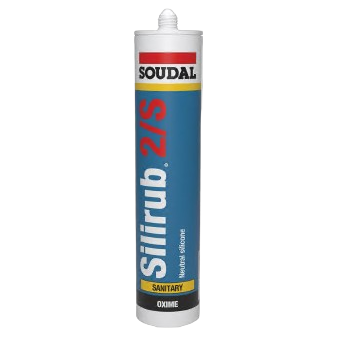
How do you close a longitudinal cleanroom insulation joint, a butt joint or a tee branch without compromising the vapour tightness of the system? T-FIT® silicone sealant provides the answer: a gun-applied sealing bead, applied before closing the shell, 6-hour drying time, combined with ZAXX9164 PVDF tape to hold the joint during curing.
ZAXX9164 PVDF tape data sheet (associated consumable)
Zotefoams-recommended silicone sealant for longitudinal joints, butt joints and valve boxes on T-FIT® Clean
Single-component silicone sealing bead, applied with a standard sealant gun. Application is mandatory on all joints of the T-FIT® Clean system: longitudinal joints of straight tubes, butt joints between lengths, assembly of elbows and tees, closure of valve and flange boxes. Typical cure time of 6 hours before applying the finishing tape on workshop-fabricated assemblies.
Apply dry, on a clean substrate free of oil and dust.
What it is for
T-FIT® Clean insulation is a closed-cell material with µ = 8,750. The water vapour permeability of the material is excellent. But a 0.1 mm open gap on a longitudinal joint means ambient air entering a cold line. The immediate result: condensation at the stainless steel tube / foam interface, corrosion under insulation, blistering, delamination. T-FIT® silicone sealant closes off this entry point.
Application is systematic, not optional. It applies to longitudinal joints (the cut line that closes the shell around the tube), butt joints (the gap between two successive straight lengths), the assembly of moulded elbows (bonding the two half-shells before closing), and the installation of valve boxes (bonding the half-shells around the component).
One precaution to remember: the sealant seals the insulation to itself, not to the process tube. The insulation must remain free to expand relative to the piping. A bead applied at the edge of the shell is enough; do not flood the tube / foam interface.
Typical cure time of 6 hours at 20°C. Plan to fabricate elbows, tees and boxes in the workshop the day before site work: the cure time is built into the schedule, not taken from installation time on the line.
Characteristics
| Characteristic | Value |
| Type | Single-component silicone sealant |
| Application | Standard sealant gun, continuous bead |
| Typical cure time | 6 hours at 20°C before taping |
| Substrate | T-FIT® Clean PVDF, clean, dry, free of oil and dust |
| Ambient application temperature | 15°C to 40°C (60°F to 105°F) |
| Compatibility | T-FIT® ZAXX9164 PVDF tape (post-cure finish) |
| Use | Longitudinal joints, butt joints, elbows, tees, valve boxes |
| Installation restriction | Do not bond the insulation to the process piping |
| Fire compliance | Complete system Euroclass B-s1,d0, FM4910 |
Frequently asked questions
Can a commercial acetic silicone be used?
No, for two reasons. First, acetic silicones release acetic acid during curing, which is incompatible with cleanroom environments where AMC levels are controlled. Second, the fire classification of the T-FIT® Clean system is characterised with the Zotefoams-recommended sealant. Substituting an uncharacterised sealant invalidates the FM4910 certification and the Euroclass classification of the system.
How long before the fabricated part can be handled?
Typically 6 hours at 20°C. Less in a warm atmosphere, more at low temperature. Do not tape before full cure: tape applied over uncured silicone tears it and leaves a joint that is not sealed.
Can the sealant be applied on a hot or cold line?
No. The line must be brought back to ambient temperature before application. On a cold line, ambient condensation compromises adhesion. On a hot line, the solvent evaporates too quickly and a skin forms before the bead is properly compressed by the closing of the shell. Ambient application temperature: 15°C to 40°C.
Application inside an elbow?
Yes for the sealant, no for the tape. The sealant is applied to the inner and outer edges of the moulded elbow, before closing and during installation around the piping. The finishing tape is applied diagonally over the outer throat of the elbow, never over the inner seam.