


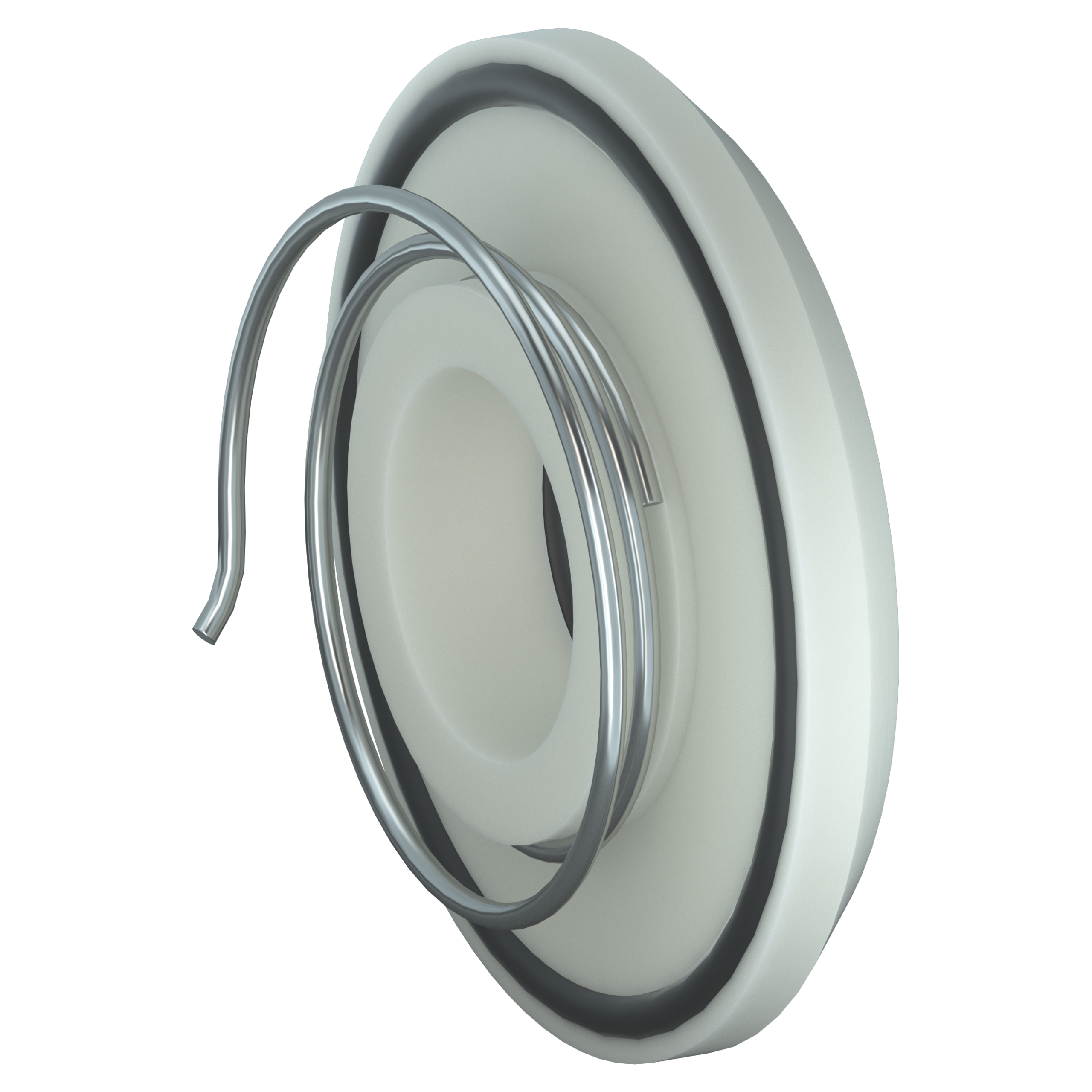
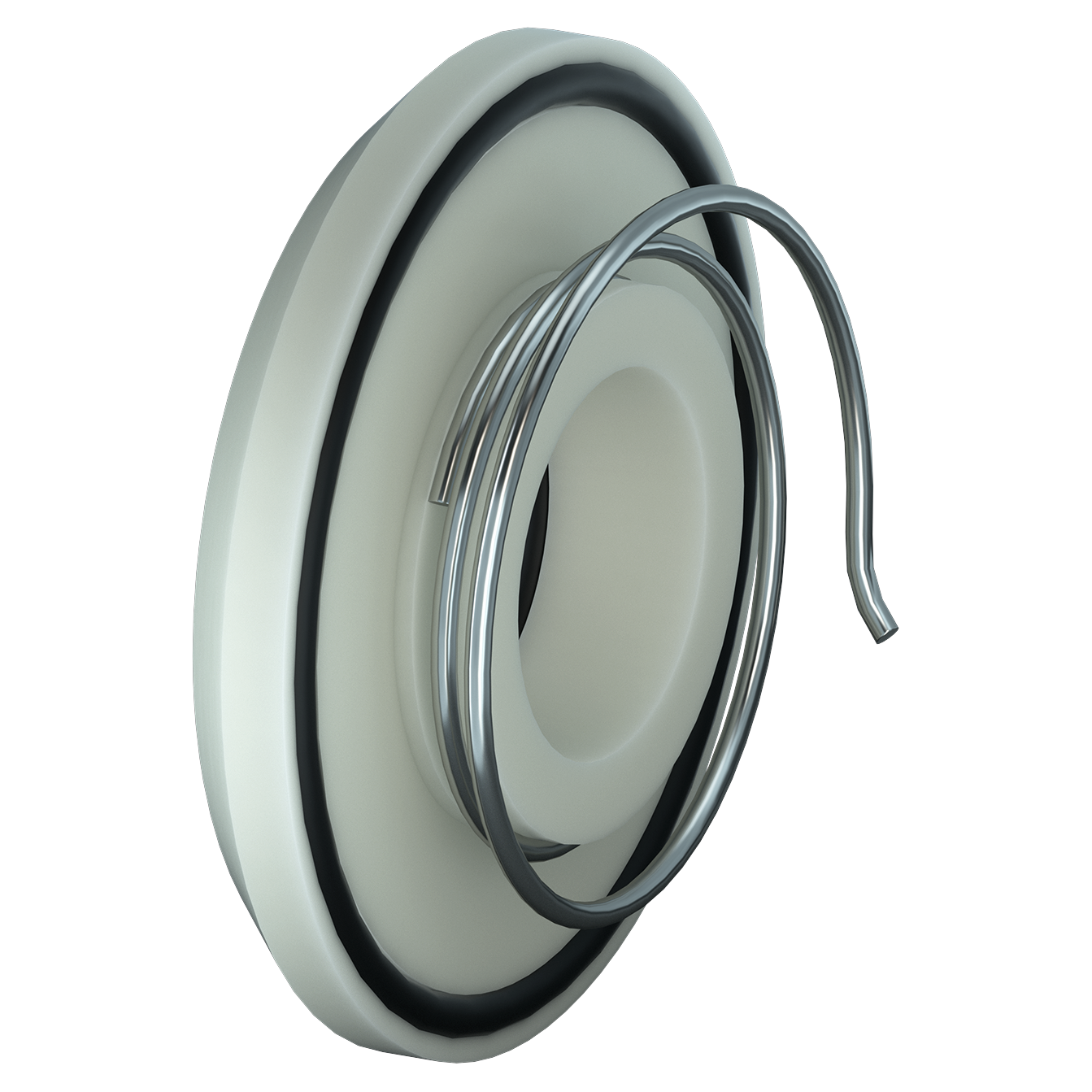
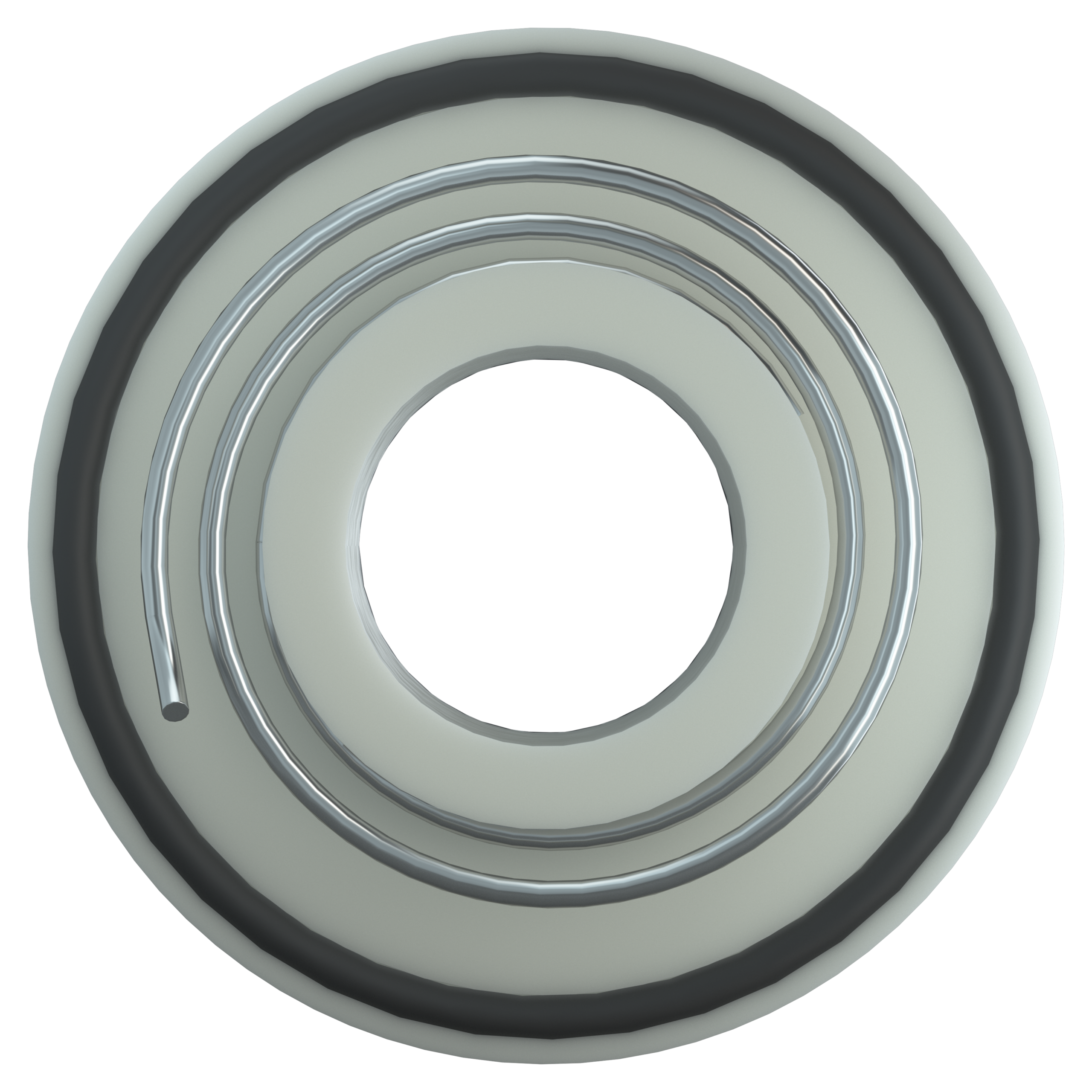
CleanShut Cleanroom Wall Penetration
How do you close a tube penetration in a cleanroom partition or ceiling without silicone sealant that needs redoing every two years, without screws that pierce the sheet metal, and without a residue line that invalidates the ISO class? CleanShut® provides the answer: a PVDF penetration with an integrated spring that hooks behind the partition, two EPDM gaskets for double sealing, installation from one side only, GMP compliant over the entire external surface Ra ≤ 0.8 µm.
CleanShut, partition and ceiling penetration for cleanrooms
PVDF tube penetration with integrated spring and double EPDM sealing, for pharma, biotech, microelectronics and ISO-classified industry installations
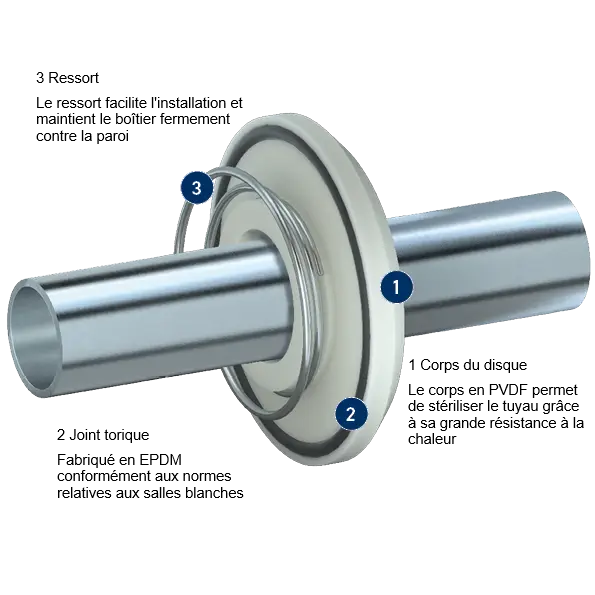
Partition and ceiling penetration dedicated to cleanrooms, manufactured by Dockweiler AG. PVDF body, two EPDM O-rings, 1.4310 stainless steel spring. Screwless installation from one side of the partition only. Two gaskets provide sealing: the first between the CleanShut body and the outer wall of the partition, the second on the tube passage in the centre. No additional silicone sealant required. Diameters available from DN 8 to DN 100 (ISO and metric) and 1/2″ to 4″ (imperial). External roughness Ra ≤ 0.8 µm over the entire exposed surface. SIP compatible thanks to the thermal resistance of PVDF. Fraunhofer CLEAN Award-winning solution.
What it is for
CleanShut closes a tube penetration through a cleanroom partition or ceiling without compromising the ISO class of the area. It is a well-known blind spot in cleanroom design: everyone specifies 316L stainless steel, electropolishing and orbital fittings, then at the wall penetration silicone sealant is applied with a trowel again. The result: a seal that cracks under thermal cycling, silicone residue that migrates into the controlled area, and a cleaning protocol that is impossible to validate properly.
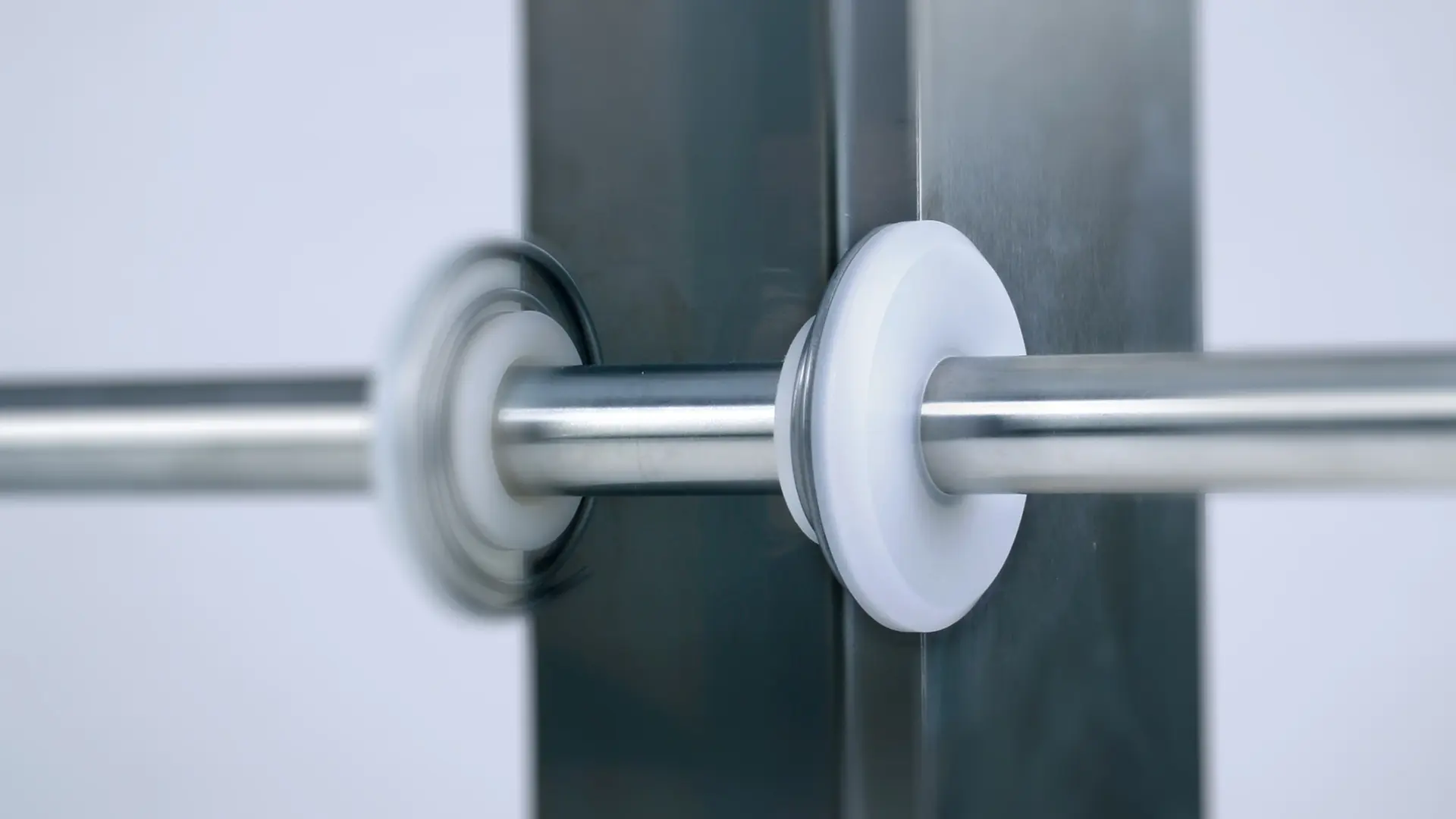
CleanShut eliminates sealant. The principle is mechanical. The PVDF body is inserted into a hole drilled to the nominal diameter + 5 mm. Behind the partition, a 1.4310 stainless steel spring unfolds and presses a counter-collar against the inner skin of the sandwich panel. The spring pressure holds the body in place and compresses the first EPDM gasket against the outer face of the partition. The second EPDM gasket, located in the central passage, seals around the process tube passing through.
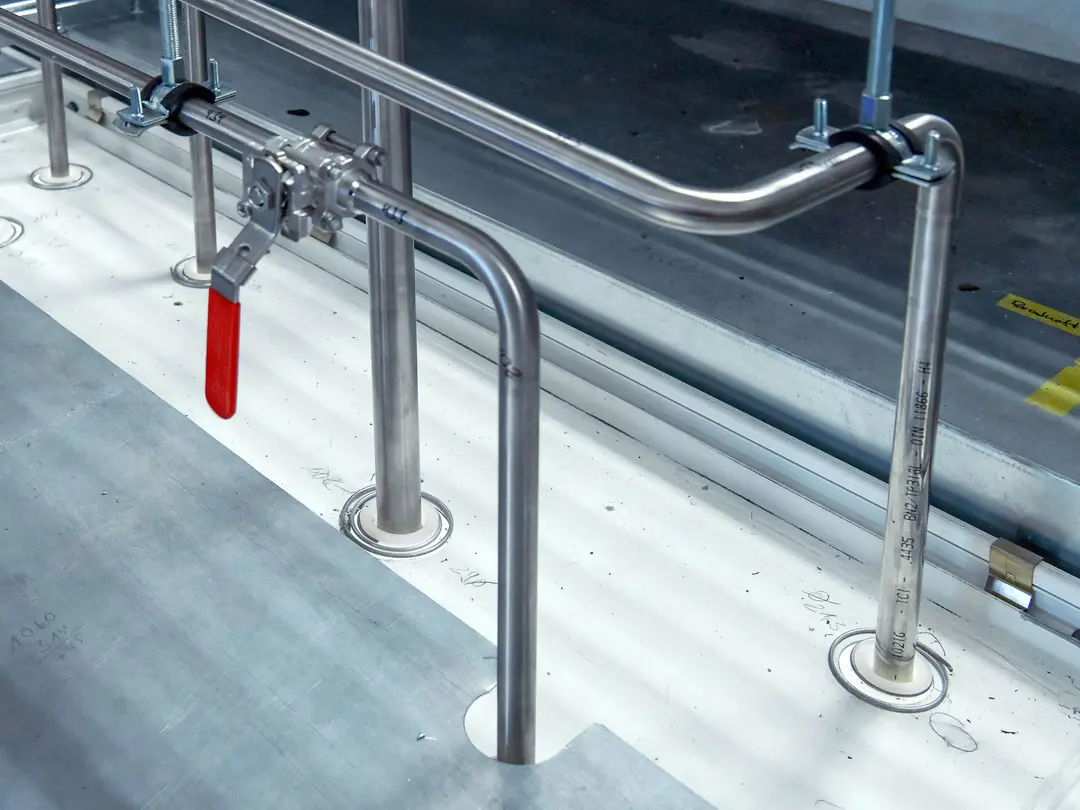
The immediate operational consequence: installation is carried out from one side only, without removing the panel, without accessing the false ceiling and without drilling from the opposite side. In an existing cleanroom in operation, this is the difference between a surgical intervention and a production shutdown to remove a panel.
The second consequence: no screws. Cleanroom partition sandwich panels are fragile; an overtightened screw delaminates the sheet metal and creates a corrosion initiation point. CleanShut does not pierce the sheet metal; it uses it for support. The risk of damaging the panel is eliminated.
External roughness Ra ≤ 0.8 µm. The pharma-grade PVDF is moulded to meet the GMP specification applicable to surfaces in contact with the cleanroom atmosphere. Can be wiped with an impregnated cloth according to common VHP, IPA and hydrogen peroxide protocols. No porosity to trap particles or micro-organisms.
Sterilisation compatibility. PVDF withstands the SIP cycles typical of pharmaceutical installations: the polymer’s thermal resistance covers the usual steam sterilisation temperatures. CleanShut therefore does not become the weak point of a SIP circuit that passes through a partition.
Diameters available in ISO, metric and imperial tables, making it possible to match standard European tubes (ISO 1127 series), German metric tubes and inch tubes in US or semiconductor installations. Direct correspondence: the stated CleanShut diameter corresponds to the outside diameter of the tube passing through.
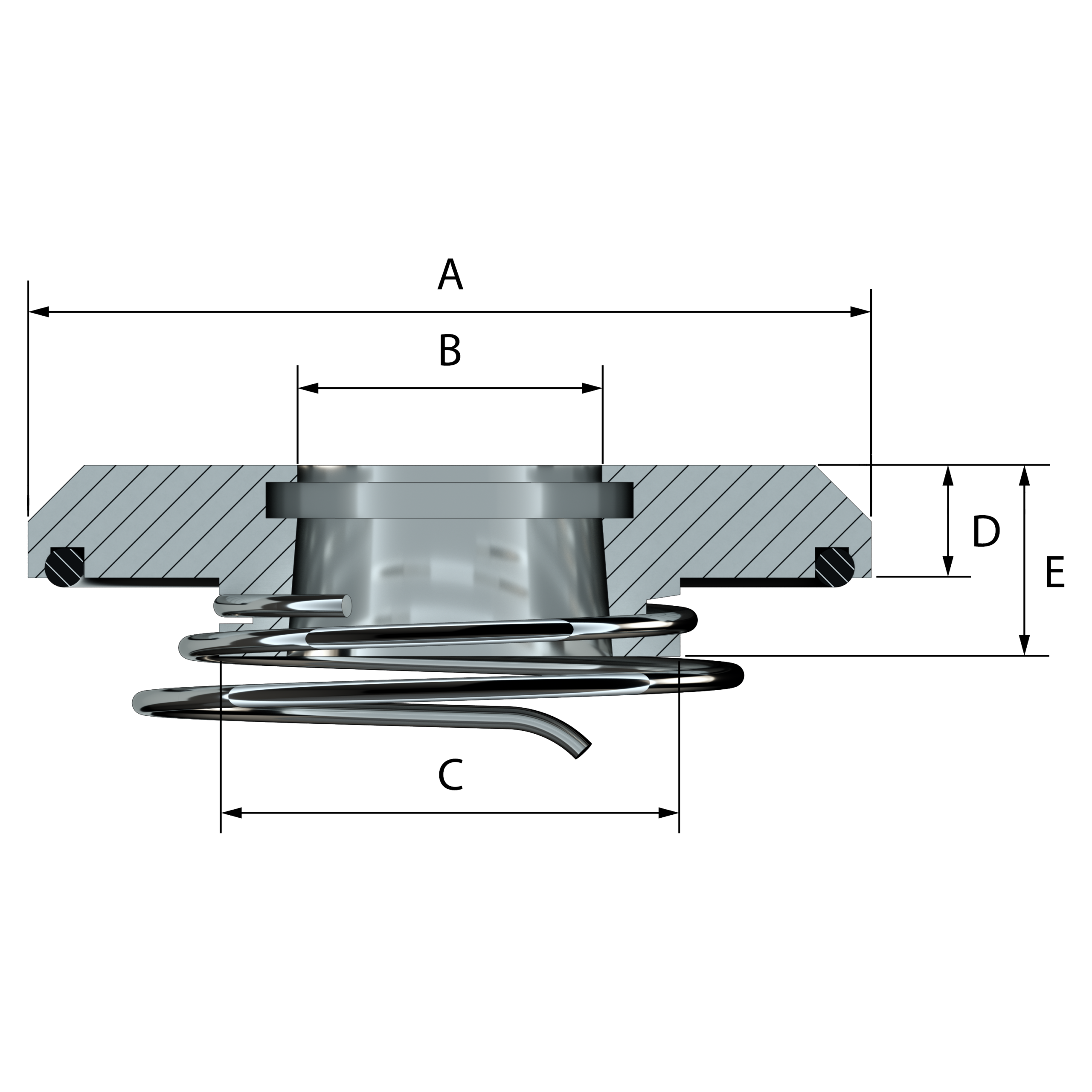
One precaution to remember: CleanShut is designed for a standard sandwich partition panel (sheet + core + sheet) of conventional thickness from 50 to 100 mm. On a masonry wall or a thick drywall partition over 100 mm, the spring does not unfold correctly at the back. Check partition thickness compatibility against dimensions A to E in the dimensional table before ordering.
Characteristics
| Characteristic | Value |
| Function | Partition and ceiling penetration for tubes in cleanrooms |
| Manufacturer | Dockweiler AG (Neustadt-Glewe, Germany) |
| Body material | PVDF |
| Gasket material | EPDM (two O-rings) |
| Spring material | 1.4310 stainless steel (X10CrNi18-8, austenitic spring stainless steel) |
| ISO tube diameters | DN 8 to DN 80 (Ø 13.5 to 88.9 mm) |
| Metric tube diameters | DN 10 to DN 100 (Ø 13 to 104 mm) |
| Imperial tube diameters | 1/2″ to 4″ (Ø 12.7 to 101.6 mm) |
| External roughness | Ra ≤ 0.8 µm, compliant with GMP requirements |
| Sealing | Double: one gasket between body and partition, one gasket on the tube passage |
| Fixing | Screwless, by spring pressure behind the partition sheet |
| Installation | From one side of the partition or ceiling only |
| No sealant | No additional silicone or sealing gasket required |
| Sterilisation | SIP compatible, thermal resistance of PVDF |
| Recognition | Fraunhofer CLEAN Award |
| System certifications | GMP-compliant design for ISO 14644 classified areas |
Frequently asked questions
How does it differ from a gun-applied silicone sealant joint?
Silicone sealant is a consumable solution, to be redone at every intervention and requalified each time. It cracks under thermal cycling, migrates to the surface, and creates a documentation problem from a GMP perspective (product type, batch, traceability, AMC compatibility). CleanShut is an industrial component qualified once: one product reference, a known material (PVDF body, EPDM gaskets), repeatable geometry, installation with no operator variable. On a bioproduction ceiling, the difference in reliability between the two solutions is significant.
Partition or ceiling, either one?
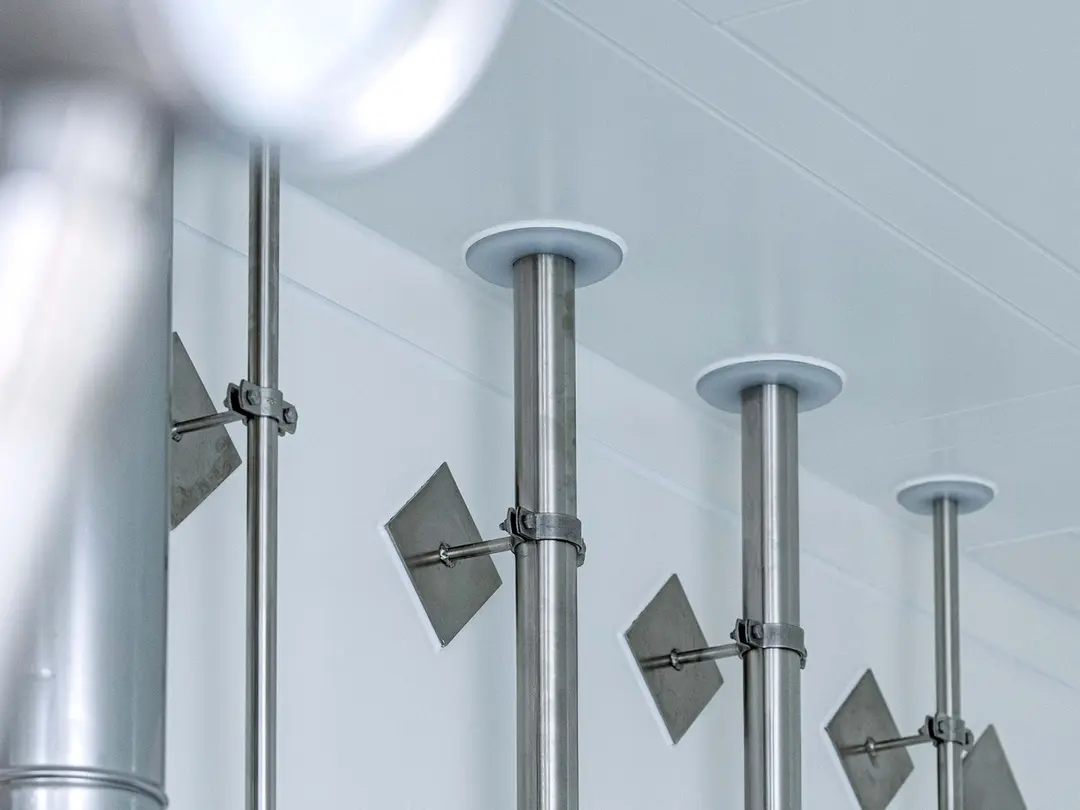
Both. The mechanical spring principle works in a vertical partition as well as a horizontal ceiling. The weight of the tube and any insulation is supported by the upstream fixing, not by CleanShut. On a ceiling, installation from one side is a decisive advantage: no need to access the technical false ceiling, which is often inaccessible in an operating cleanroom.
How many times can it be removed and refitted?
CleanShut can be removed without damaging the partition. The body is removed from the installation side. The EPDM gaskets, like any elastomer, have a limited service life and compression capacity. After several removal and refitting cycles, or after five to seven years of service depending on conditions, replacing the gaskets is recommended. The PVDF body remains reusable if not mechanically damaged.
Compatible with an insulated tube (T-FIT cleanroom insulation or equivalent)?
Not directly. CleanShut closes around the bare metal tube. For an insulated tube, there are two options: cut the insulation upstream and downstream of the penetration and close the shell with standard PVDF tape, leaving about 100 mm of bare tube at the CleanShut passage; or size a CleanShut to the outside diameter of the insulation (option on quotation, outside the standard range). Contact us to validate your case.
What partition thickness can CleanShut pass through?
Dimension D in the dimensional tables gives the effective length of the penetration body. For sizes DN 8 to DN 25, dimension D is 10 mm with a hooking zone E of 18 mm. For DN 32 to DN 50, D = 10 mm and E = 20 mm. For DN 65 to DN 100, D = 10 mm and E = 22 mm. This covers standard cleanroom sandwich panels from 50 to 100 mm total thickness. For a thicker partition or a masonry wall, consult Dockweiler for a special version.
Does PVDF withstand mechanical impacts on site?
PVDF is stiffer than PP or PE, but less tough than a metal. On site, the CleanShut body should be protected at the end of installation. In service, the penetration is not subject to loads; only the spring works, and its metal casing is protected behind the partition. Note: do not tighten CleanShut against the partition with a tool that would mark the surface, as the external roughness Ra ≤ 0.8 µm would be locally degraded.
Compatible with VHP and hydrogen peroxide disinfectants?
The PVDF body and EPDM gaskets are compatible with VHP (vaporised hydrogen peroxide) cycles and common pharma disinfection protocols. For an environment with high levels of organic solvents or strong acids, validate chemical compatibility by consulting the Dockweiler table before qualification. You are not on your own: contact us with your compatibility matrix.
Material certifications and traceability documents?
PVDF material certificates available on order. Full traceability of the body and gaskets. GMP certificates of conformity should be requested with the purchase order; they are supplied by Dockweiler with each batch. For pharma installations under ASME BPE or FDA, specify the documents required when ordering.