
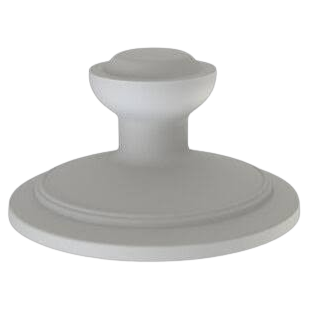
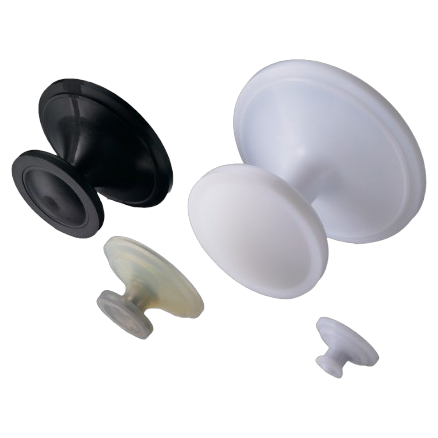
PTFE Type 25 Diaphragm for NovAseptic Valve
NovAseptic valves are aseptic by design: no dead zone, drainable, designed on the basis of more than 35 years of experience for GMP-compliant aseptic processes. The range is modular, from 1/2″ to 3″: for the same diameter, all diaphragms, actuators and accessories are interchangeable.
PTFE diaphragm for NovAseptic valves, with type 84 interface, FDA and USP Class VI, 1/2″ to 3″
PTFE type 25 diaphragm for NovAseptic valves, in contact with the product. FDA and USP Class VI compliant. Wide service range, depending on the process. Fits all NovAseptic valve bodies of the same diameter, from 1/2″ to 3″, tank bottom and process alike. Requires the type 84 interface.
Where this diaphragm is the right choice
PTFE offers the broadest chemical inertness: it resists almost all pharmaceutical products and aggressive fluids that elastomers cannot withstand. It is the diaphragm for severe chemical processes and maximum purity requirements.
PTFE is rigid and less flexible than an elastomer. It requires the type 84 interface, which provides the mechanical link between the PTFE diaphragm and the actuator. On a simple aqueous circuit, EPDM is sufficient and costs less.
The diaphragm: the product-contact component
In a diaphragm valve, the diaphragm is the only component in contact with the product. It provides the seal and separates the fluid from the actuator. Its selection determines chemical compatibility, allowable temperature and valve service life.
The diaphragm is the consumable part of the valve: it is replaced periodically, without removing the body. Its material is chosen based on the fluid and temperature, independently of the body and actuator.
The type 25 PTFE diaphragm requires the type 84 interface, which provides the mechanical link between the rigid diaphragm and the actuator stem. This interface is specific to PTFE; elastomer diaphragms do not need it.
Characteristics
| Characteristic | Value |
| Material | PTFE |
| Type | 25 |
| Service temperature | wide, depending on the process |
| Compliance | FDA and USP Class VI |
| Dimensions | 1/2″ to 3″, all NovAseptic bodies |
| Interface required | Yes, type 84 |
| Function | Product-contact sealing |
Compatible valve bodies
This diaphragm fits all NovAseptic bodies of the same diameter, tank bottom and process.
| Body | Type | Category |
| Tank bottom, 1 outlet | 44 | Tank bottom |
| Tank bottom, 2 outlets | 45 | Tank bottom |
| Tank bottom with CIP | 46 | Tank bottom |
| Sampling point | 48 | Tank bottom |
| SIP sampling point | 5 | Tank bottom |
| 2-way L | 31 | Process |
| 2-way in-line | 311 | Process |
| 3-way T | 32 | Process |
| Clamp 2.5″ or 3″ | 37 | Process |
| Clamp 1.5″ | 47 | Process |
| 3-way diverter | 39 | Process |
Frequently asked questions
Which diaphragm for my process?
EPDM for aqueous media, water and low-pressure steam. FKM for oils, solvents and high temperature. PTFE for maximum chemical inertness. Silicone for flexibility and food applications. The choice depends on the fluid and operating temperature.
Why a type 84 interface?
The PTFE diaphragm is rigid and cannot be attached directly to the actuator stem like an elastomer. The type 84 interface provides this mechanical link. It is specific to PTFE.
Can the diaphragm be changed without removing the valve?
Yes. The diaphragm is the consumable part of the valve; it is replaced without removing the welded body, which is a key point of NovAseptic maintenance, particularly on hard-to-reach tank bottoms.
Which bodies does it fit?
All NovAseptic bodies of the same diameter, tank bottom and process alike. The modularity of the range guarantees interchangeability at equal diameter.