
The 2026 edition of LASME BPE was issued on May 1, 2026. It becomes mandatory six months later, in November 2026. Between the two dates, two tubes made on the same day, in the same workshop, can legally refer to Two different editions of the same standard. This is not an administrative detail: two of the tables that define the roughness thresholds have just changed in this edition.
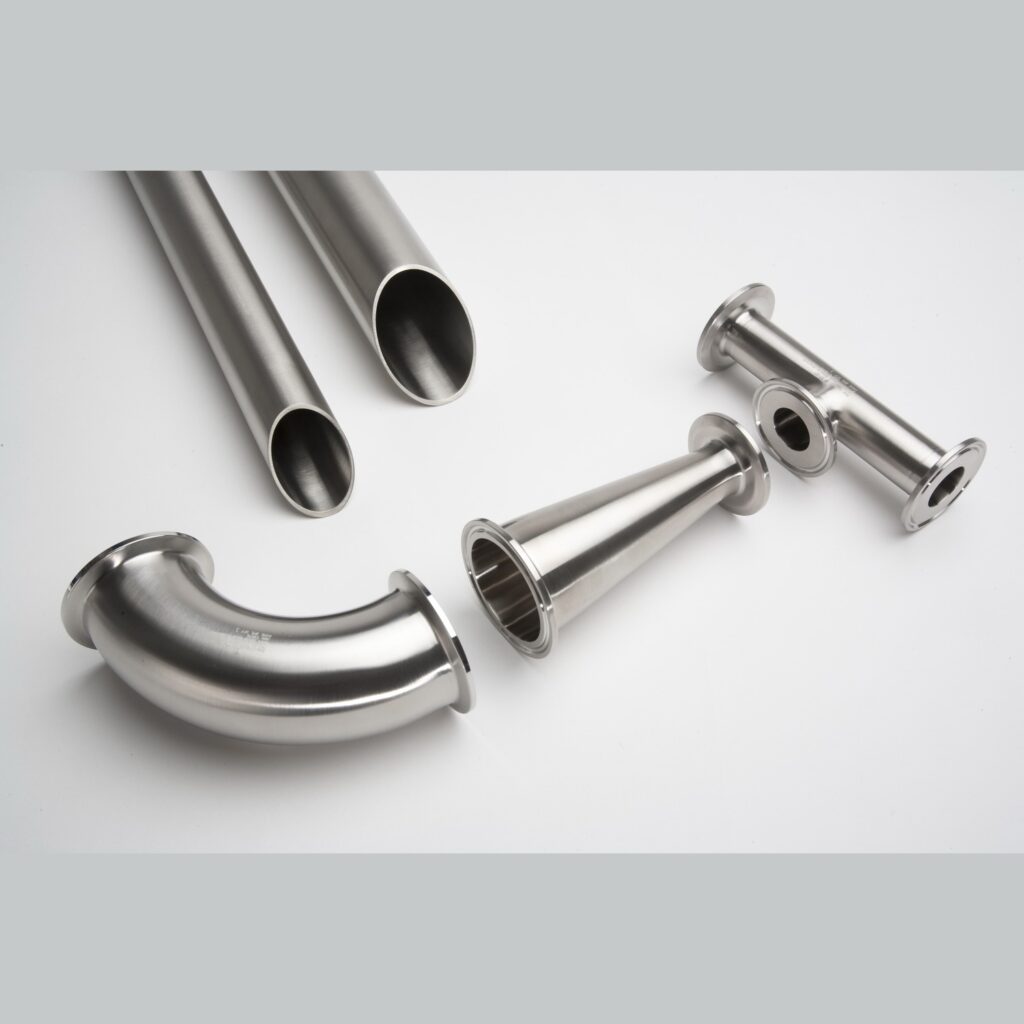
BPE Lasme (Bioprocessing Equipment) is not a standard for piping. It is a design code that covers, in a single document, materials, surface conditions, welding, dimensional tolerances and system design for the pharmaceutical and biotechnology industry. A NEN tube is only one piece among thirteen families covered. Most of the specifications that cite “ASME BPE” actually only mobilize one or two of these thirteen parts, often without knowing it.
ASME BPE means American Society of Mechanical Engineers – Bioprocessing Equipment. It is an American standard, recognized internationally, which supervises the design, materials and manufacture of bioprocess equipment: piping, fittings, valves, tanks, pumps, instrumentation and single-use systems.
Contrary to popular belief, Lasme BPE does not fix tube dimensions in the sense of a dimensional standard such as DIN 11866. It sets hygienic design requirements: absence of dead arms, minimum flow slope, weld quality, surface finish class, material compatibility with the process. Imperial standard tube diameters (1/4″ to 6″) what uses are a consequence of its historical North American use, not its primary object. We had detailed this distinction with DIN 11866 in a previous article on The roughness of pharmaceutical stainless steel tubes : the two norms combine, they do not replace one another.
The standard is revised every two years. The BPE-2026 edition revises the BPE-2024 edition. It is structured in nine chapters, themselves divided into thirteen “parts” identified by two letters. The official text is available from theasme.
Each part of Lasme BPE answers a specific question. The table below matches each part with the Tube Technologies product family that materializes it concretely.
| Chapitre | Part | Contenu de la norme | Traduction produit chez Tubes Technologies |
|---|---|---|---|
| 1 | GR | Exigences générales, assurance qualité, documentation | Cahier des charges, traçabilité matière et certificats |
| 2 | CR | Certification, marquage ASME | Marquage des tubes et raccords, certificats de conformité |
| 3 | MM | Matériaux métalliques (nuances, PREN) | 316L, 1.4435, 904L, AL-6XN, Hastelloy C22 |
| 3 | PM | Matériaux polymères et non métalliques | Élastomères des joints (EPDM, FKM, silicone, PTFE) |
| 4 | SD | Conception des systèmes multiusage | Cuves, pompes, purgeurs, disques de rupture, filtres |
| 5 | DT | Dimensions et tolérances des composants | Tubes et raccords Weldtron, Safetron, ASME BPE Direct |
| 5 | PI | Instrumentation de procédé | Capteurs de niveau, débitmètres, sondes de température |
| 5 | MC | Composants d'étanchéité, vannes, flexibles | Robinetterie, colliers TriClamp, joints clamp et toriques |
| 6 | MJ | Assemblage et soudage | Soudage orbital, passivation |
| 6 | SF | Finitions de surface | Classes SF1 à SF6, correspondance avec BF/AC/EP |
| 7 | SU | Conception des systèmes à usage unique | Hors périmètre de la gamme multiusage actuelle |
| 8 | SC / SI | Composants et instrumentation usage unique | Hors périmètre de la gamme multiusage actuelle |
| 9 | SJ | Assemblage pour usage unique | Hors périmètre de la gamme multiusage actuelle |
Chapters 1 to 6 cover multi-use: this is the heart of the Tubes Technologies range. Chapters 7 to 9 cover the one-time use (pockets, sterile connectors, thermoplastic tubing): a separate perimeter, which deserves a separate article rather than a dilution here.
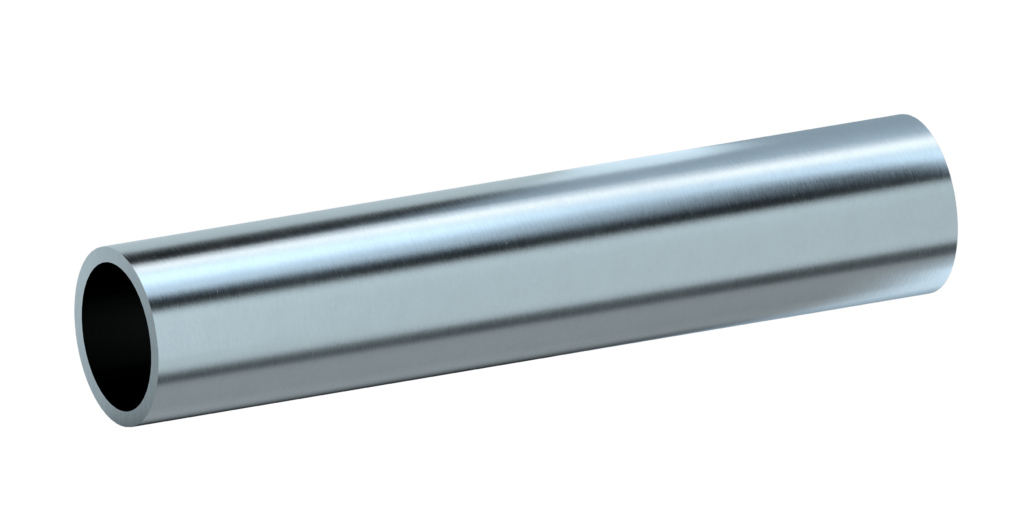
The DT share is what most buyers consult first, often without knowing the name. It fixes the dimensions and tolerances of each component, starting with the tubes themselves: nominal diameters from 1/4″ to 6″ (6.35 x 0.89 mm to 152.4 x 2.77 mm), right part lengths minimum imposed after each connection (tangent length), identical wall thickness between the tube and the end to be welded of the fitting.
Beyond the tube, the DT part divides the range of fittings into five dimensional families, each with its own reference tables:
| Famille | Repères ASME BPE (DT-4.1.x) | Variantes couvertes |
|---|---|---|
| Coudes | DT-4.1.1-1 à DT-4.1.1-10 | 90°, 45°, 180° (retour), 88°, 92°, en version soudée automatique ou clamp |
| Tés et croix | DT-4.1.2-1 à DT-4.1.2-13 | Té droit, té à sortie courte, té réducteur, té à instrument |
| Réductions | DT-4.1.3-1 à DT-4.1.3-3 | Concentriques et excentriques, en version soudée ou clamp |
| Ferrules | DT-4.1.4-1 | Métalliques, dimensions détaillées en Table DT-7.1-1 |
| Bouchons (caps) | DT-4.1.5-1 et DT-4.1.5-2 | Version soudée et version clamp à embout plein |
This numbering precisely identifies the component, regardless of the brand that manufactures it: a 90° automatic-weld elbow always responds to DT-4.1.1-1, that it comes out of a Dockweiler workshop for the range ASME BPE Direct or from another certified supplier. It is this common language that the Weldtron, Safetron and ASME BPE range of technology tubes materializes, in 316L shades (UNS S31603, EN 1.4404 or 1.4435), 904L (UNS N08904, EN 1.4539), AL-6XN (UNS N08367) or Hastelloy C22 (UNS N06022, EN 2.4602) on request. To see what each code looks like, check out our Visual Glossary of ASME BPE Part DT Codes.
Hygienic collars (TriClamp) are not treated in DT-4 but in a dedicated section: the DT-7 part fixes the standardized dimensions of metal ferrules (table DT-7.1-1) and polymers (table DT-7.1-2). It is this table, and not an insulated collar standard, which guarantees that a ferrule and a collar from two different manufacturers fit properly.
We have already detailed why the RA alone is not enough to qualify a surface. The SF share is where the BPE lasme codifies this threshold in standardized classes, applicable to metal surfaces in process contact:
| Classe SF | Procédé | Ra max. (µin) | Ra max. (µm) |
|---|---|---|---|
| SF0 | Poli mécanique, sans exigence | — | — |
| SF1 | Poli mécanique | 20 | 0,51 |
| SF2 | Poli mécanique | 25 | 0,64 |
| SF3 | Poli mécanique | 32 | 0,80 |
| SF4 | Électropoli | 15 | 0,38 |
| SF5 | Électropoli | 20 | 0,51 |
| SF6 | Électropoli | 25 | 0,64 |
These classes are not a standard parallel to the Weldtron/Safetron designations: they coexist. On the DIN 11865/66 range of technology tubes, the BF finish (gloss annealing, DIN 11866 H3O and H4O) and AC (anodic cleaning) range cover the range 0.8 to 0.4 µm, the EP finish (electropolis, He3o and He5O classes) covers 0.6 to 0.25 µm. The same tube can thus be ordered according to a DIN designation (BF, AC, EP) and must meet, in parallel, a contractual requirement expressed in ASME BPE class (SF1, SF4). Both languages describe the same physical reality with slightly different bounds. The detail of the DIN classes is in our Article dedicated to DIN 11866.
The BPE-2026 edition changed the values of the SF-2.4.1-1 table for the SF0 and SF3 designations compared to the 2024 edition. A specification written citing “SF3 according to ASME BPE” without specifying The reference edition is no longer completely unambiguous from November 2026.
The MM part lists the accepted metallic shades and their nominal compositions. For the pharmaceutical and biotech range of Tubes Technologies, four families cover most of the needs:
| Nuance | Désignations | Composition nominale | Usage |
|---|---|---|---|
| 316L | UNS S31603, EN 1.4404, EN 1.4435 | 1.4404 : Cr 16,5–18,5 %, Ni 10–14,5 %, Mo 2–2,5 % 1.4435 : Cr 17–19 %, Ni 12,5–15 %, Mo 2,5–3 % | Majorité des usages ; le 1.4435 est le plus allié des trois, donc le plus résistant à la corrosion locale |
| 904L | UNS N08904, EN 1.4539 | Cr 19–21 %, Ni 24–26 %, Mo 4–5 %, Cu 1,2–2 % | Dès que le PREN requis dépasse ce que le 316L garantit |
| AL-6XN | UNS N08367 | Cr 20–22 %, Ni 23,5–25,5 %, Mo 6–7 %, N 0,18–0,25 % | PREN élevé : fermentation, vaccins, plasma sanguin |
| Hastelloy C22 | UNS N06022, EN 2.4602 | Alliage nickel-chrome-molybdène | Sur demande, milieux les plus corrosifs, hors gamme standard |
the calculation of the pitting resistance equivalent number) which guides this choice, PREN = %CR + 3.3 x (%MB + 0.5%W) + 16 x %N According to Table F-3-1 of Lasme BPE, has already been the subject of a complete development in Our article on roughness : the material selection logic does not change here, it is combined with the dimensional choice of the part Dt.
The PM share covers in parallel the polymeric and non-metallic materials: joint elastomers (EPDM, FKM, silicone), PTFE and filter materials. It is this part that frames the Clamp, O-R and Filter Joints of the static sealing range.
The MC share is the longest and densest in component variants. It classifies the hygienic valves into ten distinct families: Weir (saddle) diaphragm valve, radial diaphragm valve, saddleless diaphragm valve (Weirless), linear control valve, regulator valve, ball valve, rising stem valve (single-seat, Double-seat mix-proof, needle, butterfly valve and fractional butterfly valve (Split Butterfly, a figure added in the 2026 edition), counter-pressure valve, pinch valve, check valve and ball valve.
This classification covers the Tube technology taps : Diaphragm valves, Ball valves, tank bottom valves and ATEX valves/firewall each correspond to one or more of these ten families, with a choice of material and finish that exactly follows the MM and SF parts described above.
Non-dead-zone pricking valve (IMI PBM): The ASME BPE requirement for the absence of dead arms applied to the valves.
The same part MC also sets the rules for static sealing components: hygienic unions by ferrule (referring to tables DT-7.1-1 and DT-7.1-2 already seen), O-rings according to AS568 or ISO standards 3601, static joint housing slots, and sealing performance requirements. This is the normative basis of clamp joints, o-rings, filter joints, calibrated orifices and Clamp Collars of the static sealing range.
For mechanical seal pumps and agitators, the MC share details thirteen dam circulation planes (repeated from API logic 682, numbered plan 01 to plane 74), which define how the joint is cooled, purged or pressurized. A magnetic stirring, like the Novaseptic range, completely bypasses this requirement: without mechanical joint passing through the tank wall, no circulation plan is to be specified. This is a design argument, not just commercial: fewer components subject to qualification means fewer potential failure points on the system.
Finally, the MC share covers hygienic hoses (Hose Assemblies), with specific design requirements which are added, without replacing them, with the material requirements of the MM and PM parts.
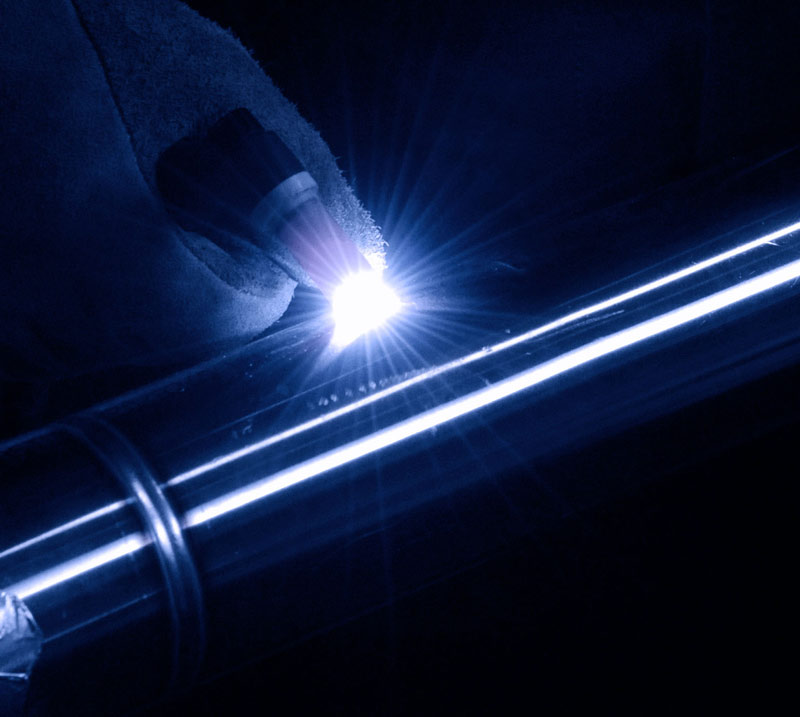
A tube and a fitting perfectly in line with the DT, MM and SF parts can be ruined by an assembly not in accordance with the MJ part. This part imposes GTAW orbital welding without filler metal as the default process, under high purity argon, with precise visual acceptance criteria on the coloring of the cord: white and straw yellow hues are acceptable, blue, violet, gray and then black hues signal an increasing oxidation of the thermally affected zone and impose a recovery, which was the quality of the preparation upstream.
The MJ share also covers the qualification of the procedures and welders, the dimensional criteria of the cord (enhancement, concavity, alignment deviation), and post-welding passivation (MJ-11), which must follow the chemical cleaning and meets the surface cleanliness requirements already described in the SF part. This subject has been dealt with in detail, particularly on the link between sulfur content and orbital welding quality, in Our article on the roughness of pharmaceutical stainless steel tubes.
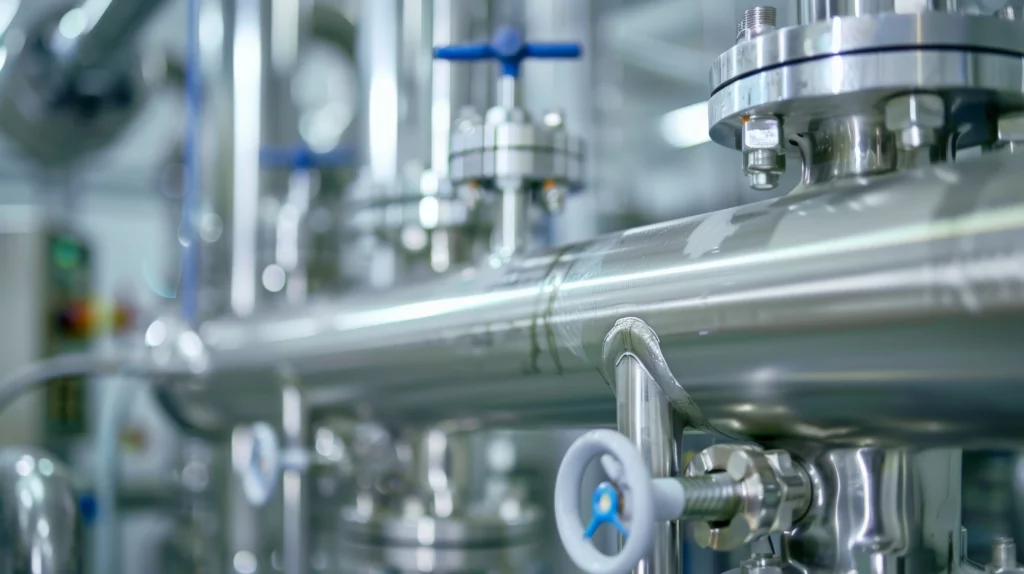
The SD part exceeds the only tube to cover the design of complete systems: pumps, tanks and tanks, heat exchangers, steam traps, port plates, decompression devices (breaking discs, valves), strainers. This is the part that gives its normative framework to peripheral equipment of the Tubes Technologies range: Breaking discs (Continental Disc Corporation partner), ultra low-pressure regulators and dumpers (Zimmerli partner), process filtration (SFERACO partner), and Novaseptic Tank Accessories (Magnetic stirring, tank bottom valves).
Two complementary products of the range are located at the periphery of this strict normative perimeter without being formally classified there: hygienic partition crossing solutions (pipetit, cleanshut) fall under the principles of hygienic design mentioned by the SD part without being the subject of a dedicated dimensional table, and thermal insulation (t fit clean) remains out of the field of BPE Lasme material, which does not treat the outer tube.
Four developments in the 2026 edition deserve to be followed by any buyer who writes or revises specifications this year:
| Évolution | Où | Conséquence |
|---|---|---|
| Valeurs de Ra maximal des classes SF0 et SF3 révisées | Table SF-2.4.1-1 | Préciser l'édition dans toute spécification « SF3 » |
| Deux nuances ajoutées : JIS SUS890L et SUS312L | Table MM-2.1-1 | Choix matière élargi aux côtés des UNS déjà connus |
| Nouvelle figure de vanne papillon fractionnée (split butterfly) | Part MC | Taxonomie des vannes papillon élargie |
| Part SI déplacée du chapitre 9 au chapitre 8 | Structure | Contenu technique inchangé, référence de citation modifiée |
None of these changes upset the existing multi-use range. But a specification which cites “ASME BPE” without specifying “2024” or “2026” becomes, from November 2026, an ambiguous reference on at least two numerical points.
Faced with a specification that requires ASME BPE compliance, the most common error consists in directly looking for “the” product reference without having clarified the four data that determine it:
These four parameters are sufficient to formulate a complete and unambiguous price request, regardless of the edition of the standard mentioned in reference.

Ancien ingénieur mise en route et expert traitement d'eau dans un grand groupe alimentaire, puis chargé d'affaires en pharmaceutique, microélectronique et agroalimentaire. Profil LinkedIn

Components distributed by Tubes Technologies, stock in Mions (69).
At Tubes Technologies, each component of the Weldtron, Safetron and ASME BPE range is referenced according to these four parameters, geometry, nuance, finish, connection, before any commercial proposal.
 Guide de sélectionRugosité des tubes inox pharmaceutiques : ce que le Ra ne vous dit pasRa, classes DIN 11866, grille de spécification par fluide, soudure orbitale, rouging.Lire l'article →
 NormeDIN 11866 : ce que dit vraiment la norme des tubes inox aseptiquesSéries A, B, C, classes H1 à HE5, suffixe « o », delta ferrite, pressions admissibles.Lire l'article →
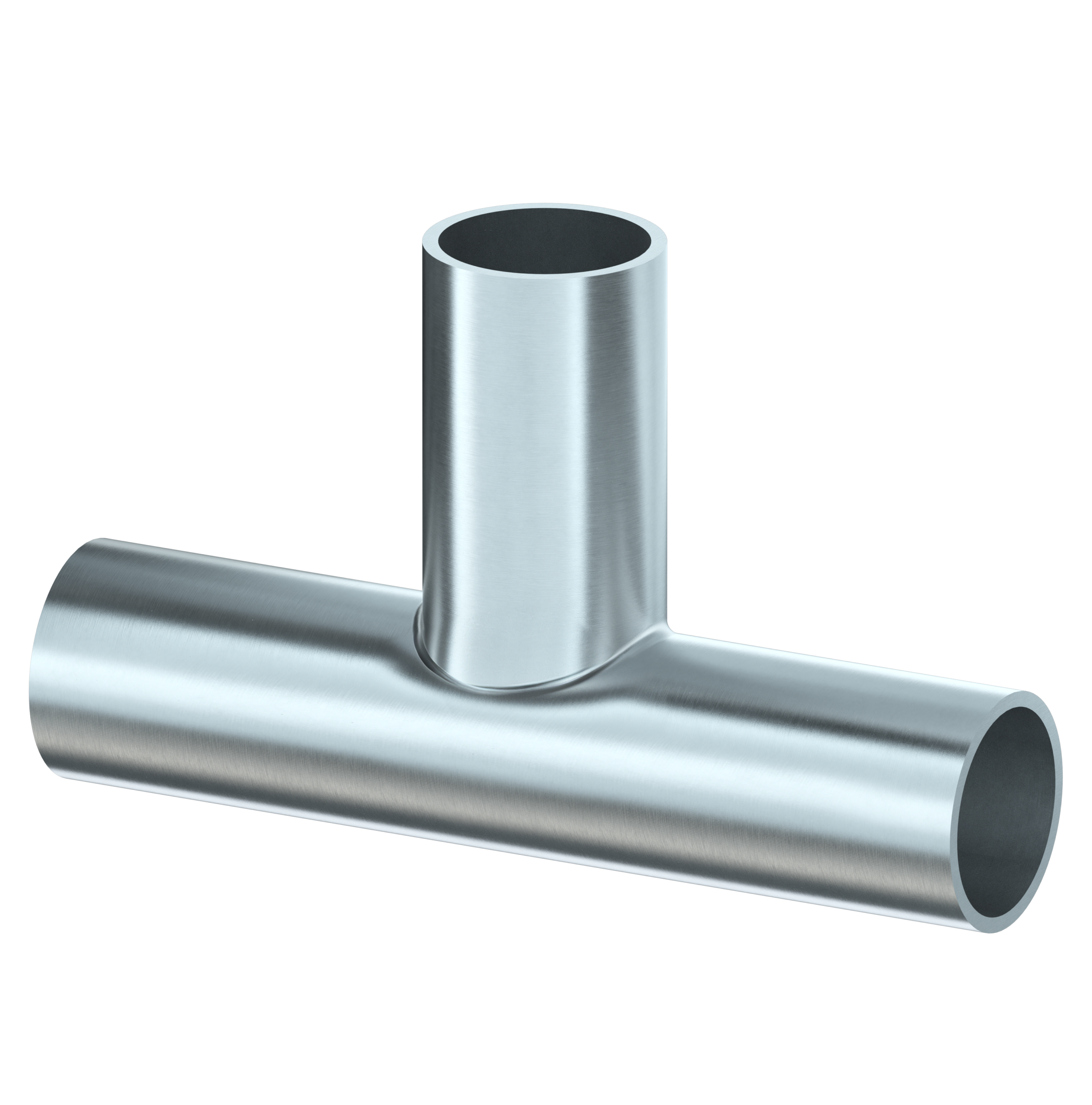 Glossaire visuelGlossaire visuel ASME BPE Part DT : la photo de chaque code32 codes Part DT en photo : coudes, tés, réductions, ferrules et bouchons, avec leur fiche produit.Lire l'article →