
HPX-PT® Pre-Torqued Disc Holder
A glass-lined flange is not tightened like a stainless steel flange.
Tighten it enough to compress a rupture disc, and you risk chipping the glass lining.
Tighten it just enough for the glass lining, and the disc leaks.
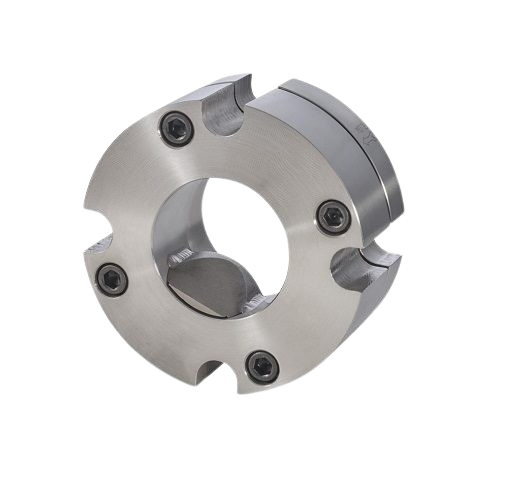
Continental Disc®’s HPX-PT® pre-torqued holder separates the two problems: the disc is tightened in the workshop, to the exact torque, by socket head cap screws built into the holder.
The assembly is then fitted between the process flanges, which only have to seal their own gaskets.
DN 25 to DN 300, ASME, DIN or JIS flanges.
HPX-PT® Pre-Torqued Holder datasheet (PDF)
HPX® Product Family brochure (PDF)
HPX-PT®, workshop pre-torqued rupture disc holder
Holder for HPX® and HPX®-Ta discs, tightened by coated class 12.9 socket head cap screws, DN 25 to DN 300, ASME 150 to 600, DIN PN 10 to PN 40, JIS 10 to 40K flanges
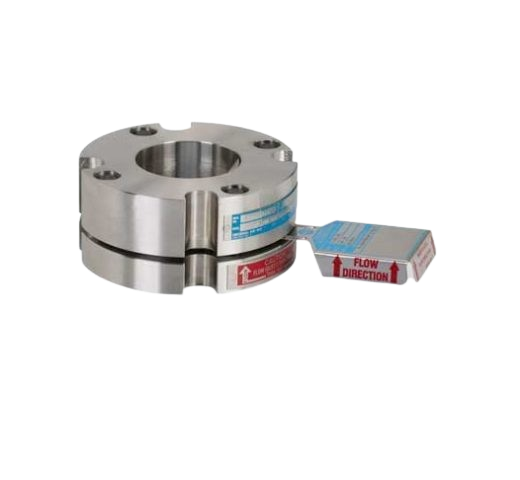
Rupture disc holder whose inlet and outlet are assembled with high-strength steel hexagon socket head cap screws. The HPX® disc is fitted and tightened in the workshop to the torques recommended by Continental Disc, in a clean, controlled environment, before the assembly is installed between the flanges of the relief line.
The pre-torquing screws are coated against wear, galling and corrosion. The reference torque in the installation manual assumes a class 12.9 alloy steel screw with NEDOX® FM-5 polymer coating: a lower-strength screw or one without this coating may give insufficient assembly load or break. Standard materials: carbon steel, 316 stainless steel, Alloy 400 and Alloy C276. National Board certified KR coefficients with HPX® disc: KRG 0.29 and KRL 0.38.
What it is for
Four situations in which the HPX-PT® holder is required. Glass-lined, glass or fluoropolymer-lined flanges, which cannot provide the compression needed to seal the disc. Piping where access to the flange bolts prevents correct torque tightening. Severe processes that require the disc and its holder to be removed regularly for inspection. Applications that require a leak test of the disc and holder assembly before installation on the line.
A second, less visible benefit: disc tightening no longer depends on the flanges. Pipe misalignment or flange gasket creep no longer affect the load on the disc. The burst pressure remains that stated on the certificate.
Combined with an HPX®-Ta disc and a tantalum-lined inlet, the HPX-PT® is the reference configuration for glass-lined reactors and tanks in fine chemicals and pharmaceuticals: full tantalum protection on the process side and compression ensured in the workshop.
Characteristics
| Characteristic | Value |
| Type | Holder pre-torqued by hexagon socket head cap screws |
| Compatible discs | HPX® (HPX-90 and HPX-95), HPX®-Ta |
| Diameters | 1″ to 12″ (DN 25 to DN 300); reduced-height HPX-PT-RH version from 1″ to 8″ |
| ASME flanges | Classes 150, 300, 600 from 1″ to 3″; 150 and 300 from 4″ to 12″ |
| DIN flanges | PN 10 to PN 40 depending on diameter |
| JIS flanges | 10K to 40K depending on diameter |
| Pre-torquing screws | Class 12.9 alloy steel, NEDOX® FM-5 polymer coating |
| Materials | Carbon steel, 316 SS, Alloy 400, Alloy C276 |
| National Board certified KR factor | KRG 0.29 (gas), KRL 0.38 (liquid) |
| Coatings | Fluoropolymer, TANTALINE®, tantalum lining of the inlet |
| Mounting under a safety valve | HPX-PT can be coupled depending on diameter; HPX-PT-RH cannot be coupled directly |
HPX-PT® holder dimensions and weights
Extract from the HPX® Product Family brochure. The model may vary depending on flange class and diameter.
| Diameter | Outside diameter (mm) | PT / PT-RH height (mm) | PT / PT-RH weight (kg) |
| 1″ (DN 25) | 92,2 | 45,7 / 37,3 | 1,5 / 1,2 |
| 1½″ (DN 40) | 117,6 | 51,8 / 42,4 | 2,9 / 2,4 |
| 2″ (DN 50) | 133,4 | 59,9 / 45,7 | 4,2 / 3,2 |
| 3″ (DN 80) | 177,8 | 81,5 / 55,6 | 10 / 6,8 |
| 4″ (DN 100) | 205,7 | 100,8 / 73,6 | 15 / 11 |
| 6″ (DN 150) | 265,2 | 143,3 / 92,5 | 26 / 17 |
| 8″ (DN 200) | 327,1 | 184,4 / 95,8 | 46 / 24 |
| 10″ (DN 250) | 393,7 | 155.4 / no | 58 / no |
| 12″ (DN 300) | 460,5 | 180.8 / no | 95 / no |
Options
Special heights. Pressure gauge taps threaded into the outlet. J-Hook on the inlet. Flange studs and nuts in alloy steel or 316 stainless steel. Fluoropolymer coating or TANTALINE® treatment against corrosion. Tantalum lining of the inlet for HPX®-Ta assemblies. Universal B.D.I.® burst sensor. For installations without tightening constraints, see the HPX® Insert holder.
Frequently asked questions
HPX-PT® or HPX® Insert: which should I choose?
If the process flanges can compress the disc correctly and torque tightening is accessible: HPX® Insert, simpler and lighter. If the flanges are glass-lined or lined, if access to the bolts is difficult, or if the assembly must be tested in the workshop: HPX-PT®. At 2″, the weight difference is 2.7 kg versus 4.2 kg in ASME 150.
Why coated class 12.9 NEDOX® screws?
Because the pre-torquing torque in the manual is calculated for this strength and this friction coefficient. An 8.8 or uncoated screw does not achieve the same load on the disc for the same torque, or breaks. If a screw needs replacing, it must be replaced with an identical screw.
Can sealing be tested before installation on the line?
Yes, this is one of its intended uses. The disc and pre-torqued holder assembly forms a self-contained sub-assembly that can be tested on a bench before fitting. Useful during qualification, or when a line shutdown costs more than the holder.
Does the HPX-PT® really protect a glass-lined flange?
It removes the need to tighten hard on the glass lining. Glass-lined flanges only have to compress their flange gaskets, not the disc. The risk of chipping the glass lining during tightening disappears, and the load on the disc no longer depends on what the flange can withstand.
Can the disc be refitted after an inspection?
No. A removed rupture disc must not be reinstalled: risk of leakage and operation outside its burst pressure. The advantage of the HPX-PT® is that a new, pre-torqued spare assembly can be prepared in the workshop and swapped in a few minutes.
Is there a more compact version?
Yes, the reduced-height HPX-PT-RH, from 1″ to 8″. At 3″, it is 55.6 mm high instead of 81.5 mm, and weighs 6.8 kg instead of 10 kg. On the other hand, it cannot be coupled directly under a safety valve.