
NovAseptic mixing head repair, for GMP mixing heads with fixed or removable bearings: the mixing head is identified and quarantined on receipt, inspected, its bearing is removed and measured, then the mixing head is resurfaced (polishing and electropolishing), checked and re-engraved. It then receives a new genuine Merck NovAseptic female bearing, or gets its original bearing back if it is in good condition, before being returned to site within 4 to 6 weeks. As Merck no longer repairs NovAseptic mixing heads, Tubes Technologies provides this service for all GMP mixing heads installed in France and across Europe.
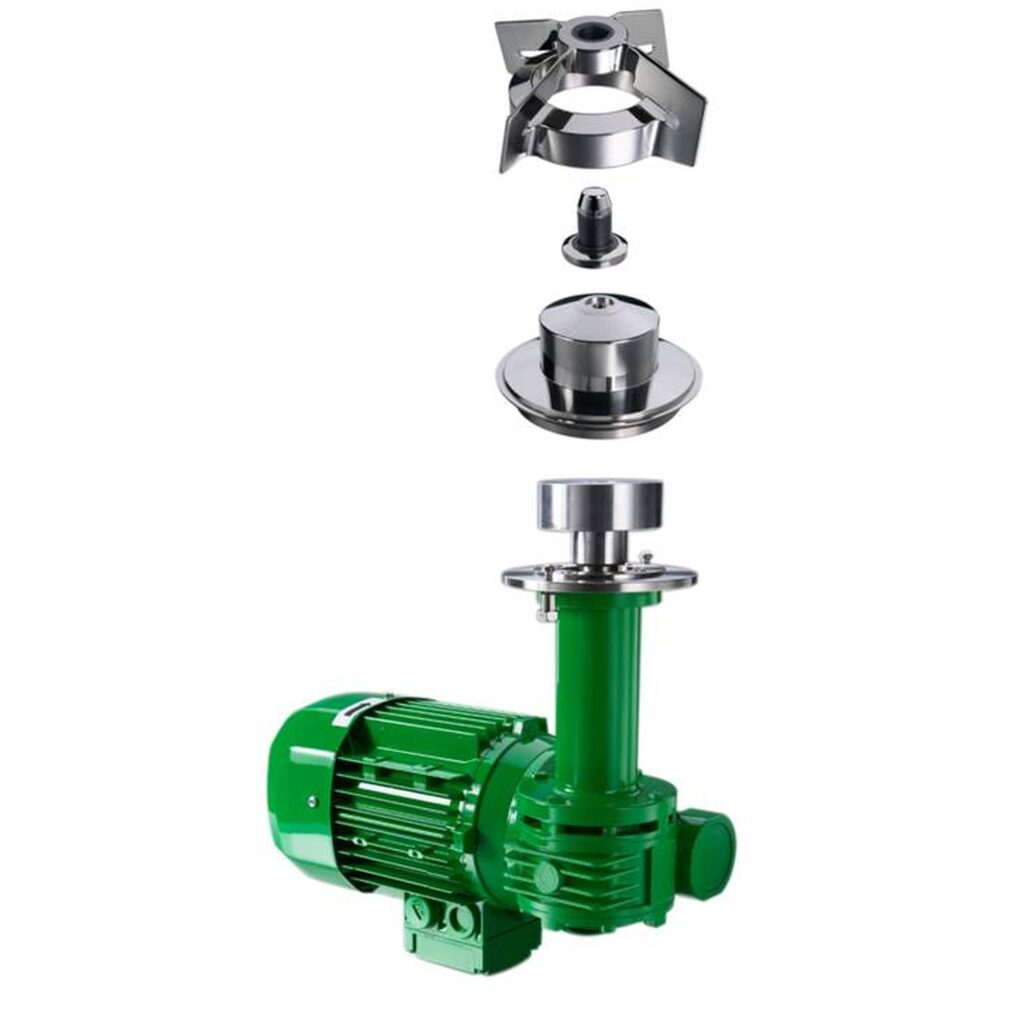
A NovAseptic GMP magnetic mixer consists of an external drive unit, a tank plate welded to the vessel, a male bearing screwed onto this plate and a mixing head that rotates around the bearing. The male bearing is static. The female bearing, integrated into the mixing head, rotates with it. These two silicon carbide parts rub against each other throughout mixing.
On a fixed-bearing mixing head, the female bearing is crimped and sealed into the body of the mixing head at the factory. It cannot be removed on site. These mixing heads remain very widely in service, especially in France.
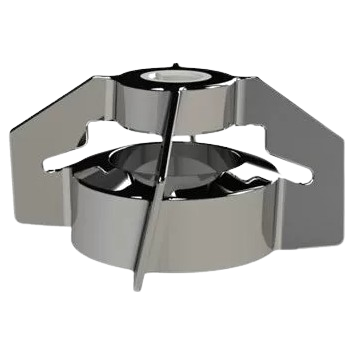
On a removable-bearing mixing head (GM#/15 range), the female bearing is replaced with a dedicated tool and a spare parts kit. This is the only version Merck sells today.
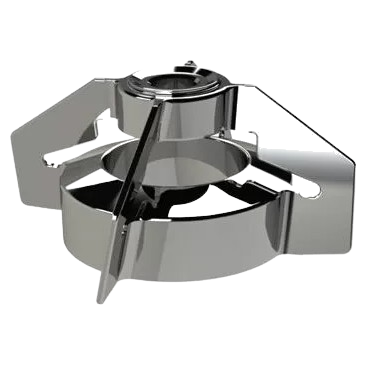
Merck no longer repairs NovAseptic mixing heads, neither with fixed nor with removable bearings.
Tubes Technologies repairs both versions with the same process and the same genuine Merck NovAseptic parts.
A NovAseptic mixing head installed in a GMP vessel is part of qualified equipment. Replacing it with a different model generally requires change control and, depending on the risk assessment, partial requalification of the equipment, in line with EU GMP Annex 15 (qualification and validation).
The female bearing is a wear part. The rest of the mixing head, bar and plate in 316L stainless steel (EN 1.4435) or a special alloy, is designed to last much longer. Repairing the mixing head keeps the same reference, the same dimensions and the same mixing behaviour.
On a removable-bearing mixing head, the kit allows the bearing to be changed on site. A full repair goes further: it also restores the surface of the mixing head by polishing and electropolishing, checks its air gaps and restores traceability by re-engraving. It suits mixing heads that have suffered impacts, surface marks or abnormal operation, and sites that prefer to entrust the work to a workshop.
Merck recommends regular inspection of the male and female bearings, described in its technical brief TB1475EN. The female bearing diameter is measured at 6 points minimum, and the value is compared with the maximum allowable diameter for the size of the mixing head.
A repair is needed when:
Silicon carbide is very hard but brittle. Excessive vibration can crack and then break up a worn bearing. Acting early avoids introducing ceramic particles into the product.
The Tubes Technologies repair process is identical for fixed-bearing and removable-bearing mixing heads, whatever the material of the mixing head. It includes seven operations, carried out and traced for each mixing head, after receipt of the decontamination certificate. The bearing is removed at the start of the process and refitted at the end, on a restored mixing head.
Identification and quarantine. On arrival, the mixing head is identified by our logistics team and placed in a quarantine area, pending inspection.
Inspection. The mixing head is examined: condition of the female bearing, surface condition, clearances and marks. The inspection determines whether the mixing head can be repaired and identifies the possible causes of the damage observed. The site receives a documented inspection report before the repair.
Female bearing removal and dimensional check. The bearing is removed from the mixing head, then checked dimensionally.
Resurfacing: polishing and electropolishing. The surfaces of the mixing head are polished, then electropolished, as in the original manufacture. Electropolishing smooths the surface and restores the passive layer of the metal. Originally, NovAseptic GMP mixing heads are ground and electropolished to Ra ≤ 0.38 µm, the level of the SF4 finish of the ASME BPE standard.
Air gap inspection. Clearances and air gaps are checked to ensure the mixing head is centred on its bearing and correctly coupled magnetically to the drive unit.
Re-engraving. The mixing head is re-engraved to ensure its traceability after repair.
Female bearing fitting. Depending on the result of the dimensional check, a new silicon carbide bearing, a genuine Merck NovAseptic part, is fitted to the mixing head, in EP (standard) or EPDC (diamond coated) version. If the original bearing is confirmed to be in good condition, it is refitted: the work is then a standard refurbishment.
Each mixing head is returned with its repair documentation.
The service covers all NovAseptic GMP mixing heads, with fixed or removable bearings. The mixing head can be made of 316L stainless steel (EN 1.4435), AL6XN, C22 or 316Ti: it remains repairable with the same process. The table below gives, for each size in the range, the reference of the fixed-bearing mixing head, the removable-bearing mixing head and the matching female bearing kit.
| Model | Fixed-bearing mixing head | Removable-bearing mixing head | Female bearing kit (removable version) | Standard material | Female bearing | Original finish |
|---|---|---|---|---|---|---|
| GMP 50 | GM05/12 | GM05/15 | GM051FBE-SP322 / GM051FBE-SP326 | 316L / EN 1.4435 | SiC (SSiC) | Electropolished, Ra ≤ 0.38 µm |
| GMP 100 | GM1/12 | GM1/15 | GM051FBE-SP322 / GM051FBE-SP326 | 316L / EN 1.4435 | SiC (SSiC) | Electropolished, Ra ≤ 0.38 µm |
| GMP 500 | GM5/12 | GM5/15 | GM520FBE-SP322 / GM520FBE-SP326 | 316L / EN 1.4435 | SiC (SSiC) | Electropolished, Ra ≤ 0.38 µm |
| GMP 1000 | GM10/12 | GM10/15 | GM520FBE-SP322 / GM520FBE-SP326 | 316L / EN 1.4435 | SiC (SSiC) | Electropolished, Ra ≤ 0.38 µm |
| GMP 2000 | GM20/12 | GM20/15 | GM520FBE-SP322 / GM520FBE-SP326 | 316L / EN 1.4435 | SiC (SSiC) | Electropolished, Ra ≤ 0.38 µm |
| GMP 5000 | GM50/12 | GM50/15 | GM50300FBE-SP322 / GM50300FBE-SP326 | 316L / EN 1.4435 | SiC (SSiC) | Electropolished, Ra ≤ 0.38 µm |
| GMP 10000 | GM100/12 | GM100/15 | GM50300FBE-SP322 / GM50300FBE-SP326 | 316L / EN 1.4435 | SiC (SSiC) | Electropolished, Ra ≤ 0.38 µm |
| GMP 20000 | GM200/12 | GM200/15 | GM50300FBE-SP322 / GM50300FBE-SP326 | 316L / EN 1.4435 | SiC (SSiC) | Electropolished, Ra ≤ 0.38 µm |
| GMP 30000 | GM300/12 | GM300/15 | GM50300FBE-SP322 / GM50300FBE-SP326 | 316L / EN 1.4435 | SiC (SSiC) | Electropolished, Ra ≤ 0.38 µm |
Sources: Merck specification sheets SP1011EN (Ver. 4, 07/2020) and female bearing kit GM#FBE-SP###. Fixed-bearing references (GM#/12) based on Merck guide TB1475EN and sheet SP1181EN. Suffix 322: standard SiC bearing (EP); suffix 326: SiC bearing with UNCD diamond coating (EPDC). Original operating range: 5 to 135 °C, pH 1 to 14.
For a NovAseptic mixing head repair, the standard lead time is 4 to 6 weeks from receipt of the mixing head and its decontamination certificate. For a production stop, Tubes Technologies handles emergency (“red ball”) requests on demand.
This lead time makes it possible to schedule the repair during a planned shutdown, or to run a spare mixing head while the main one is being repaired.
The site procedure is the same for both versions of mixing heads:
Tubes Technologies handles the entire repair and returns the mixing head with its documentation.
As distributor of NovAseptic magnetic mixers in France, Tubes Technologies supports the pharmaceutical, biotech and cosmetics industries throughout the life cycle of their mixing heads: supply, genuine spare parts and repair of fixed-bearing and removable-bearing mixing heads. For a NovAseptic mixing head repair, contact our team.

Ancien ingénieur mise en route et expert traitement d'eau dans un grand groupe alimentaire, puis chargé d'affaires en pharmaceutique, microélectronique et agroalimentaire. Profil LinkedIn

Merck NovAseptic GMP magnetic mixers, from 50 L to 30,000 L. Fixed-bearing or removable-bearing mixing heads, repaired with genuine Merck NovAseptic parts.
Open the request with your Tubes Technologies representative, attach the decontamination certificate of the mixing head, then ship it: you receive the inspection report on receipt, and the mixing head comes back repaired within 4 to 6 weeks.
 Pillar articleASME BPE: what the standard says and all the parts that make up its rangeMaterials, SF1 to SF6 finishes, fittings and valves, part by part.Read the article →
 Selection guideRoughness of pharmaceutical stainless steel tubes: what Ra doesn't tell youRa, DIN 11866 classes, specification by fluid, orbital welding, rouging.Read the article →