
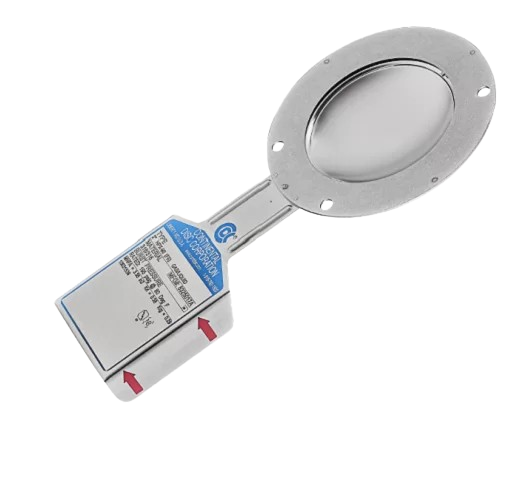
HPX®-Ta Tantalum Disc
In dry chlorine, many materials hold up. In chlorine that has picked up moisture during evacuation, most disc materials give way. Tantalum holds.
Continental Disc®’s HPX®-Ta is an all-tantalum reverse-acting rupture disc, designed for bromine, chlorine, hydrochloric acid, nitric acid and sulphuric acid.
DN 25 to DN 300, 0.689 to 55.2 barg, up to 260°C, compatible with the entire range of HPX® holders.
HPX® Product Family brochure (PDF)
HPX®-Ta, tantalum rupture disc for highly corrosive media
Scored semi-circular reverse-acting disc in tantalum, DN 25 to DN 300, 0.689 to 55.2 barg, 260°C max, 90% operating ratio, 1,000 vacuum/pressure cycles, non-fragmenting
Scored semi-circular reverse-acting rupture disc with a tantalum dome. For certain concentrations, temperatures and moisture contents, tantalum is often the only rupture disc material that resists. Outlet ring in 316 stainless steel as standard, in Alloy C276 or tantalum on request. Non-fragmenting. Safety ratio of 1 to 1 or less: a damaged disc opens at or below its burst pressure.
Cycling resistance of at least 1,000 cycles from full vacuum to maximum operating pressure. Burst pressures, manufacturing ranges, tolerances and operating ratio identical to the -90 version of the HPX®. National Board certified KR coefficients in HPX® Insert and HPX-PT® holders: KRG 0.29 and KRL 0.38. Tantalum sourced from certified conflict-free smelters, in accordance with the Dodd-Frank Act.
What it is for
The classic scenario: a dry chlorine line, a nickel alloy disc that holds for years, then an evacuation that draws in moist air. Wet chlorine attacks, the disc is perforated, and production stops for an unplanned intervention. The HPX®-Ta eliminates this failure mode at source.
A second use case: glass-lined or PTFE-lined reactors and tanks. Combined with an HPX-PT® pre-torqued holder with a tantalum-lined inlet, the HPX®-Ta provides full tantalum protection on the process side, and disc compression is ensured in the workshop, where the glass-lined flange cannot provide it.
Typical applications: reactors, storage, exchangers, discharge heads and valve isolation in petrochemicals and agrochemicals; distillation columns and separators in oil and gas; production tanks and exchangers in pharmaceuticals; industrial gas columns and tanks; specialty gas distribution and storage in semiconductor manufacturing.
Characteristics
| Characteristic | Value |
| Type | Reverse-acting disc, scored semi-circular, non-fragmenting |
| Disc material | Tantalum |
| Outlet ring | 316 SS as standard; Alloy C276, tantalum and others on request |
| Diameters | 1″ to 12″ (DN 25 to DN 300) |
| Burst pressure range | 0.689 to 55.2 barg (10 to 800 psig) at 22°C depending on diameter |
| Operating ratio | 90% of marked burst pressure (burst pressures, ranges and tolerances of the HPX-90 version) |
| Maximum temperature | 260°C (tantalum disc and fluoropolymer liner) |
| Cycling resistance | Minimum 1,000 cycles from full vacuum to maximum operating pressure |
| Safety ratio | 1 to 1 or less |
| Fluid | Gas, steam or liquid (specify compressible or incompressible when ordering) |
| Target fluids | Bromine, dry and wet chlorine, HCl, nitric acid, sulphuric acid |
| Compatible holders | HPX® Insert, HPX-RH, HPX-PT®, HPX-PT-RH, HPX® double disc |
| National Board certified KR factor | KRG 0.29 (gas), KRL 0.38 (liquid) in Insert and HPX-PT® holders |
| Certifications on request | ASME Section VIII Division 1 (UD), PED 2014/68/EU (CE) |
| Material traceability | Conflict-free tantalum (Dodd-Frank Act) |
| Burst detection | Compatible with B.D.I.® alarm system |
Burst pressure ranges by diameter
Minimum and maximum pressures available at 22°C, at the limits of the manufacturing range.
| Diameter | Minimum burst pressure (barg) | Maximum burst pressure (barg) |
| 1″ (DN 25) | 1,03 | 55,2 |
| 1½″ (DN 40) | 0,689 | 48,3 |
| 2″ (DN 50) | 0,689 | 44,8 |
| 3″ (DN 80) | 0,689 | 31,0 |
| 4″ (DN 100) | 0,689 | 20,7 |
| 6″ (DN 150) | 0,689 | 13,8 |
| 8″ (DN 200) | 0,689 | 6,89 |
| 10″ (DN 250) | 1,03 | 5,17 |
| 12″ (DN 300) | 1,03 | 3,45 |
Options
Fluoropolymer liner on the process side (1″ and 1½″ above 2.07 barg, 2″ to 12″ above 1.72 barg). Fluoropolymer protective cover on the vent side for the disc and holder. Cleaning for oxygen or chlorine service. Holder with tantalum-lined inlet, or TANTALINE® coating of the inlet and outlet: the tantalum is formed into the base metal, with no flaking or delamination. ASME (UD) stamp and CE marking per PED on request. B.D.I.®burst sensor, with tantalum conductors on request.
Frequently asked questions
Tantalum or Alloy C276: where is the boundary?
C276 covers a large proportion of mineral acids. Tantalum takes over when chlorine or bromine are wet, in hot concentrated HCl, in concentrated nitric acid, and in concentrated sulphuric acid up to about 150°C. On a rupture disc, metal thickness is measured in tenths of a millimetre: a few µm per year of corrosion are enough to shift the burst pressure. If the corrosion table leaves any doubt about C276, choose tantalum.
Why a 90% ratio and not 95% like the HPX®?
The HPX®-Ta uses the burst pressures, tolerances and manufacturing ranges of the HPX-90 version. For an operating pressure of 4.5 barg, a minimum burst pressure of 5 barg is therefore required. This must be taken into account when sizing the maximum allowable pressure of the equipment.
Does the HPX®-Ta withstand vacuum?
Yes, at least 1,000 cycles from full vacuum to maximum operating pressure. This is precisely the situation in which moisture enters a dry chlorine line: the disc must withstand the vacuum and resist the attack that follows.
How can the holder also be protected?
Three levels. Fluoropolymer coating on the inlet, intermediate flange or outlet. TANTALINE® coating: pure tantalum formed into the base metal, with no porosity. Tantalum lining of the inlet of a 316 holder. Combined with a tantalum outlet ring, the assembly is fully protected on the process side.
Is the HPX®-Ta used in microelectronics?
Yes, for specialty gas distribution and storage in semiconductor manufacturing: HCl, Cl2, BCl3, HBr, where residual moisture turns a mildly aggressive dry gas into an acid. Cleaning for oxygen or chlorine service is available as an option.
The datasheet mentions the Dodd-Frank Act: why?
Tantalum comes from coltan, an ore whose extraction partly finances armed conflicts in Central Africa. Continental Disc sources from certified conflict-free smelters. Useful for responsible purchasing policies and the due diligence obligations of contracting companies.